
How to make GCCs Talent Mobility Engines: Top Strategies to Attract and Retain Workforce
The global talent landscape is in constant flux, and enterprises worldwide face a significant hurdle in attracting and retaining professionals with specialized skills. Talent attraction and retention is now a top business priority, with Global Capability Centers (GCCs) emerging as the most viable solution.
GCCs are functioning as dynamic talent mobility engines providing access to diverse, global skill pools. A strategic GCC talent mobility approach allows the creation of cross-border career opportunities for top professionals while using innovative methods for retaining these vital experts.
Role of GCCs in Global Talent Mobility
GCCs are transforming business operations and becoming central to global corporate strategy. This shift has reshaped how companies manage their global workforces. GCCs attract top talent from various fields, driving digital transformation and building a culture of continuous learning. As a result, GCCs are now at the forefront of global talent strategies.
What’s better, is that this is a two-way street. While GCCs facilitate the movement of skilled professionals, employees stand to gain valuable international experience by working with top Fortune 500 companies and fast paced startups.
GCCs also help in talent retention by providing clear paths for career advancement, thus reducing employee turnover rates. Furthermore, they contribute to local talent development by investing in training and upskilling programs. This also helps in building a sustainable talent pipeline. They often partner with local universities, which ensures a steady supply of qualified graduates.
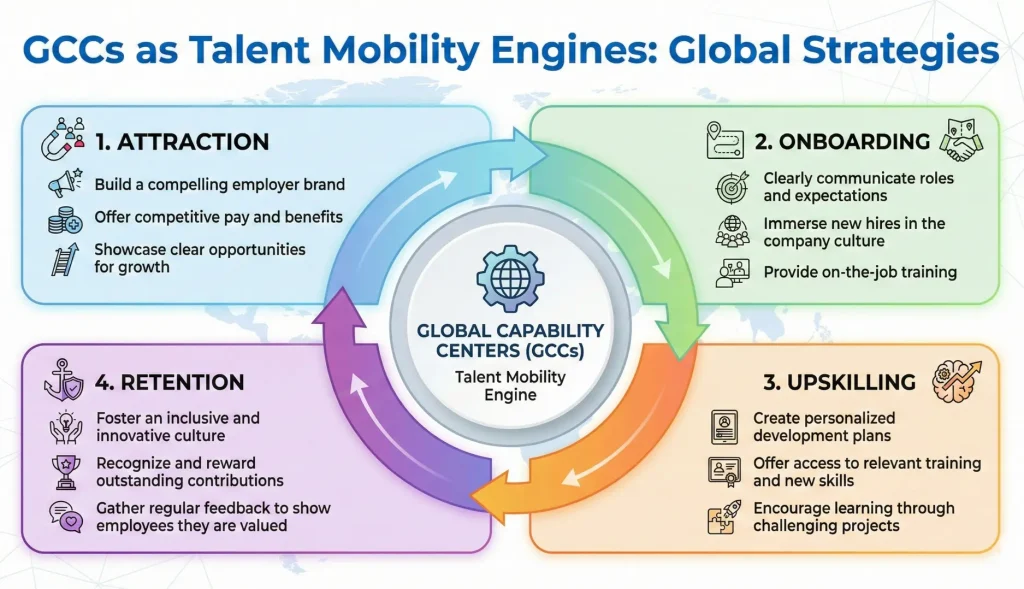
Strategies for Attracting Specialized Skills
Since talent attraction is a critical challenge for global enterprises, the modern workforce now demands a strategic and multi-faceted approach. In this context, companies need to actively cultivate an environment that attracts experts, which requires a focus on brand perception and innovative technology.
Success depends on moving beyond traditional recruitment methods with the following tenets:
Employer Branding and EVP
A strong employer brand is a magnet for niche talent, as it communicates a company’s unique identity. A company’s reputation often precedes any job posting, with specialists researching potential employers thoroughly. They seek alignment with their own values and career goals, and making a clear brand narrative that resonates with them is essential.
The Employee Value Proposition (EVP) is the core of a brand and defines what a company offers to its employees. This goes beyond salary and basic benefits and includes opportunities for growth and impact. A powerful EVP highlights a supportive and innovative culture, while promising meaningful work and professional development.
Leveraging AI in Recruitment
Artificial intelligence is also transforming GCC talent mobility. AI tools offer unprecedented efficiency and precision, analyzing vast datasets to find ideal candidates. This helps recruiters effectively identify passive talent or specialists not actively looking for jobs.
AI algorithms can scan professional networks and databases to identify individuals with very specific skill sets. This expands an enterprise’s talent pool significantly. Furthermore, AI streamlines the entire hiring process by automating tasks like screening resumes, freeing up recruiters to focus on human interaction. AI-powered platforms lead to better hiring decisions and improved retention on the whole.
Retaining Top Talent in GCCs
Attracting top talent is just the beginning. The success of a GCC depends on its ability to hold on to professionals with specialized skills. High turnover rates can increase costs and disrupt operations, which makes the retention of top performers a critical business priority.
Upskilling and Career Pathways
Competitive salary is just one of the things that modern employees consider. In addition, they look for meaningful opportunities for professional development and a healthy working culture. Keeping this in mind, GCC leaders need to implement comprehensive upskilling programs to ensure that the workforce skills remain aligned with the emerging industry trends.
An equally important aspect is the existence of clearly defined career progression paths. An employee’s commitment deepens when they see a clear future and understand the steps for advancement within the organization.
Building a Culture of Innovation
Top talent usually prefers an organizational culture that encourages them to think creatively and challenge the status quo. Their engagement level rises when they feel that their inputs and contributions are valued.
Thus, GCCs need to focus on building an atmosphere that promotes experimentation and considers failure as a valuable learning experience. A workplace that buzzes with new ideas is exciting and becomes a place where top performers want to stay.
Attracting top-tier specialists and retaining them is a continuous cycle, and no longer optional. It is a crucial aspect of today’s global talent strategies, which defines an enterprise’s ability to achieve growth.
Connect with ANSR to leverage our expertise with AI-powered hiring and transform your global talent strategy into a sustainable competitive advantage.